Citations are a key indicator of the impact, credibility, and scholarly contribution of a research publication. Whether a researcher belongs to Computer Science, Medical Sciences, Law, Management, Social Sciences, or Humanities, citation performance reflects how effectively their work is recognized, applied, and extended by the academic community. Achieving strong citation impact is not accidental-it requires a combination of strategic planning, domain relevance, research quality, and visibility. This article presents a comprehensive, cross-disciplinary framework to help researchers improve citation performance across diverse academic fields.
Reference Insight from a High-Impact Study
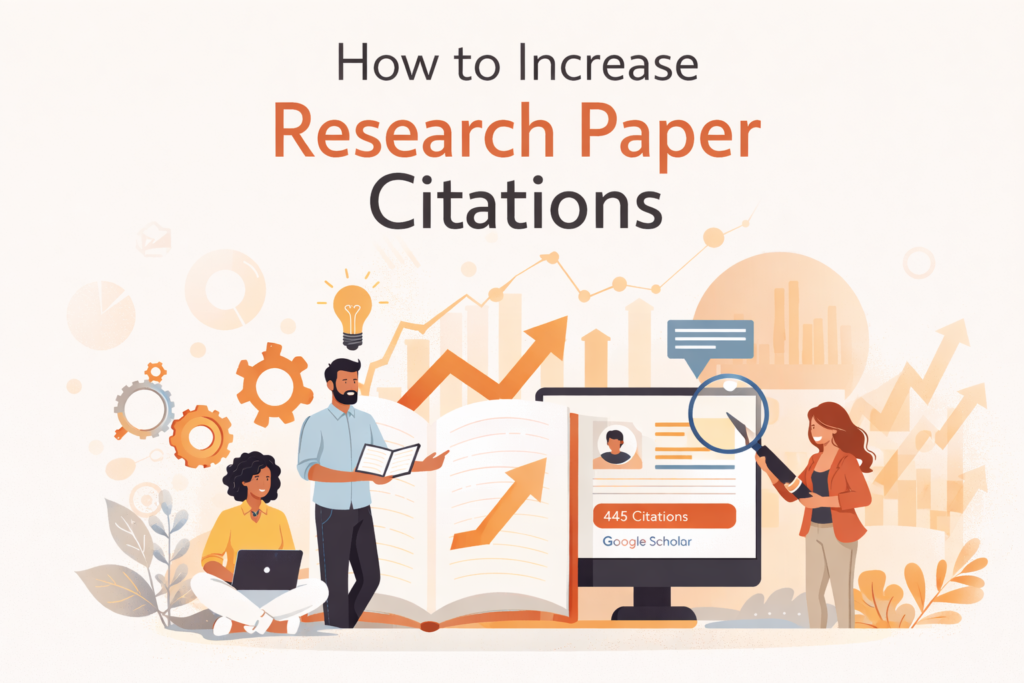
A representative example of strong citation performance is a research study authored by Dr. Pranav Ratta, which has achieved:
445 citations (as indexed on Google Scholar)
This demonstrates that well-structured, relevant, and accessible research can achieve significant academic impact, regardless of domain.
Understanding Citation Growth
Citations increase when a research paper successfully meets three core conditions:
Discoverability
The research is easily found through academic platforms and databases.
Relevance
The topic aligns with current academic, industry, or societal needs.
Usability
The work is useful for other researchers and can be cited in future studies.
These three pillars visibility, relevance and applicability are essential across all disciplines.
Key Strategies to Increase Citations (All Domains)
1. Selection of High-Impact Research Areas (CS, Medical, Law, Management & More)
One of the most important decisions in research is choosing the right topic.
Highly cited research is typically associated with areas that are:
- Actively evolving
- Widely studied
- Relevant to real-world challenges
Examples Across Disciplines:
- Computer Science & Engineering: AI, cybersecurity, data science, blockchain
- Medical & Health Sciences: public health, disease prevention, healthcare systems
- Law & Legal Studies: cyber law, constitutional reforms, human rights, data protection laws
- Management & Business: digital transformation, leadership, entrepreneurship, sustainability
- Social Sciences & Humanities: education policy, social change, cultural studies
- Environmental Studies: climate change, renewable energy, sustainability
Key Insight:
Research areas with broad applicability and future relevance naturally attract more citations.
2. Interdisciplinary Research Approach
Modern research increasingly integrates multiple disciplines.
Examples:
- Technology + Law (e.g., data privacy regulations)
- Healthcare + Management (e.g., hospital administration systems)
- Environment + Policy (e.g., climate governance)
Interdisciplinary research:
- Expands audience reach
- Increases citation opportunities
3. Foundational and Review-Based Research
Research that:
- Summarizes existing knowledge
- Identifies research gaps
- Provides future directions
Often becomes a primary reference for new researchers
Such papers are widely cited across all domains.
4. Focus on Practical and Policy-Level Relevance
Research that contributes to:
- Policy-making (Law, Governance)
- Industry solutions (Management, Engineering)
- Social impact (Education, Humanities)
Gains long-term academic and practical attention.
5. Accessibility and Indexing
For higher citations, ensure your research is:
- Published in recognized journals
- Indexed in academic databases
- Accessible to researchers globally
Visibility is directly proportional to citation growth.
6. Clarity and Structured Writing
Highly cited research is:
- Clearly written
- Well-organized
- Easy to interpret
Across all domains, clarity improves usability and citations.
7. Optimization for Academic Search Engines
To enhance discoverability:
- Use domain-specific keywords
- Write clear and descriptive titles
- Develop strong abstracts
This improves ranking on
Google Scholar
8. Active Research Dissemination
Researchers should actively promote their work:
- Share on ResearchGate
- Upload to Academia.edu
- Present in academic conferences
Greater exposure leads to higher citation probability.
9. Collaboration Across Institutions and Domains
Collaborative research:
- Expands reach
- Increases credibility
- Enhances interdisciplinary citations
Especially important in Law, Management, and policy-driven research.
10. Consistency in Research Focus
Maintaining consistency in a research domain helps:
Common Mistakes That Limit Citations
- Choosing low-impact or outdated topics
- Lack of interdisciplinary approach
- Poor research visibility
- Weak writing structure
- Publishing in non-reputed journals
Long-Term Citation Growth Framework
Phase 1: Topic Selection
Choose relevant and high-impact research area
Phase 2: Research Development
Ensure quality, originality, and clarity
Phase 3: Publication Strategy
Select an appropriate journal and optimize the content
Phase 4: Post-Publication Strategy
Promote research and engage with the academic community
Conclusion
Citation growth reflects the overall impact and relevance of research across disciplines. As demonstrated by the referenced study with 445 citations, impactful research is driven by:
- Strategic topic selection
- Interdisciplinary relevance
- Accessibility and visibility
- Continuous academic engagement
Researchers from Computer Science, Medical Sciences, Law, Management, and other domains can significantly improve their citation performance by adopting a structured and long-term approach.