
In recent years, the issue of fake universities in India has become a serious concern for students and parents. With the rapid expansion of higher education and online learning, many unauthorized institutions are misleading students by offering invalid degrees.
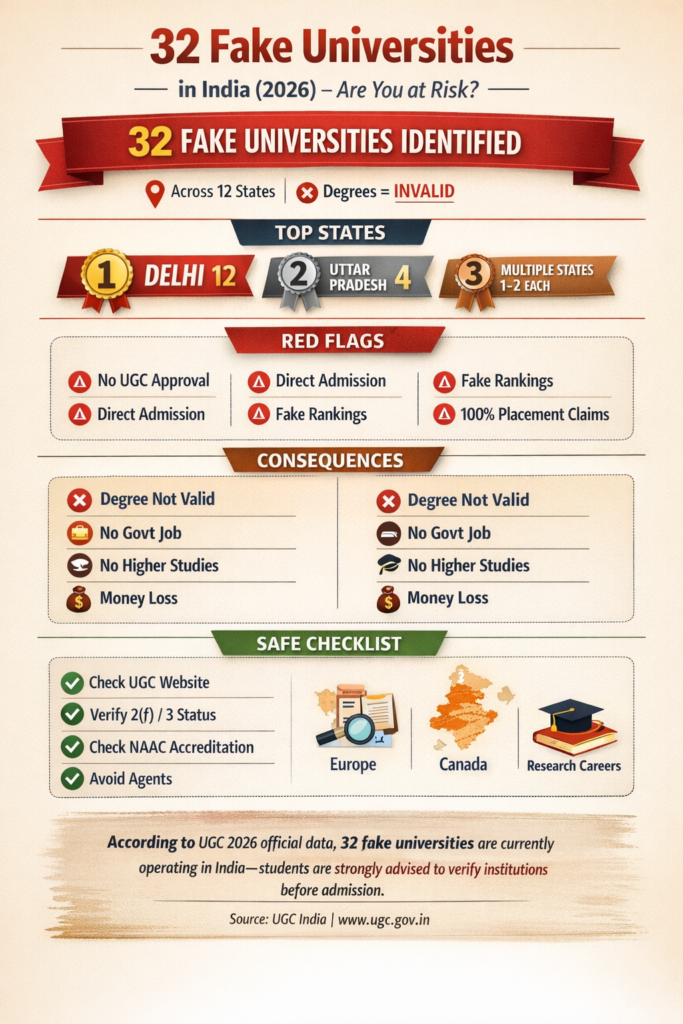
According to the University Grants Commission, a total of 32 fake universities across 12 states have been identified as of 2026.
These institutions are not legally authorized to grant degrees, making any qualification from them invalid for jobs, higher studies, or government exams.
Official UGC Fake Universities List 2026 (State-Wise)
Below is a summarized state-wise distribution based on UGC warnings:
| State / UT | No. of Fake Universities | Key Examples |
|---|---|---|
| Delhi | 12 | AIIPHS, Commercial University Ltd., United Nations University |
| Uttar Pradesh | 4 | Gandhi Hindi Vidyapith, Bhartiya Shiksha Parishad |
| Andhra Pradesh | 2 | Christ New Testament University, Bible Open University |
| Karnataka | 2 | Global Human Peace University |
| Kerala | 2 | IIUPM, St. John’s University |
| Maharashtra | 2 | Raja Arabic University |
| West Bengal | 2 | Institute of Alternative Medicine |
| Puducherry | 2 | Sree Bodhi Academy |
| Haryana | 1 | Magic & Art University |
| Jharkhand | 1 | Daksha University |
| Rajasthan | 1 | Rajeev Gandhi Institute |
| Arunachal Pradesh | 1 | Indian Institute of Alternative Medicine |
Total: 32 Fake Universities
Key Insights Every Student Must Know
- Delhi has the highest number (12) of fake universities
- The number has increased significantly in recent years
- These institutions operate without UGC approval
- Degrees issued are legally invalid
This trend highlights the urgent need for awareness and verification before admission
What Exactly is a Fake University?
A fake university is an institution that:
- Is not recognized by the University Grants Commission
- Is not established under any Central/State Act
- Has no authority to award degrees
Such institutions often misuse terms like “international,” “global,” or “open university” to appear legitimate.
Red Flags You Should Never Ignore
Before taking admission, watch out for these warning signs:
- No mention on the official UGC website
- Direct admission without eligibility criteria
- Fake rankings and awards
- “100% placement guarantee” claims
- Lack of proper campus or faculty information
Consequences of Studying in a Fake University
Choosing the wrong institution can have serious consequences:
- Degree not valid anywhere
- Rejection in government and private jobs
- Not eligible for higher education (India & abroad)
- Financial loss and wasted years
In many cases, students realize the fraud only after completing their degree.
How to Verify a University (Step-by-Step Guide)
To stay safe, always follow these steps:
1. Check the Official UGC Website
Verify whether the university is listed as approved
2. Confirm Legal Status
Check if it is established under:
- Central Act
- State Act
- Deemed University
3. Verify Accreditation
Look for:
- NAAC accreditation
- AICTE approval (for technical courses)
4. Cross-Check Course Approval
Even approved universities may have unrecognized programs
Why Students Are Exploring Study Abroad Options
Due to rising concerns about fake institutions:
Many students are now considering international education
Benefits include:
- Globally recognized degrees
- Strict regulatory frameworks
- Better research opportunities
Before choosing India, explore global options carefully and make informed decisions.
Important Advisory
“According to UGC 2026 official data, 32 fake universities are currently operating in India—students are strongly advised to verify institutions before admission.”
Final Conclusion
The rise of fake universities in India is a serious challenge in 2026. While opportunities in education are expanding, so are the risks.
A single wrong decision can:
- Damage your career
- Waste valuable time
- Lead to financial loss
The solution is simple yet powerful:
Always verify before you trust
Pingback: Study Abroad 2026: Cheapest Countries for Indian Students (Low Cost Guide)