India is moving rapidly toward a digital future. We hear constant discussions about Artificial Intelligence, coding, cybersecurity, data science, and the need to prepare students for the technology-driven world ahead. Government initiatives promote digital literacy, smart classrooms, innovation, and skill-based education as the pathway to national growth.
But beneath all this progress lies a troubling contradiction.
While the nation talks about digital transformation, many government schools still do not have regular recruitment for Computer Science lecturers.
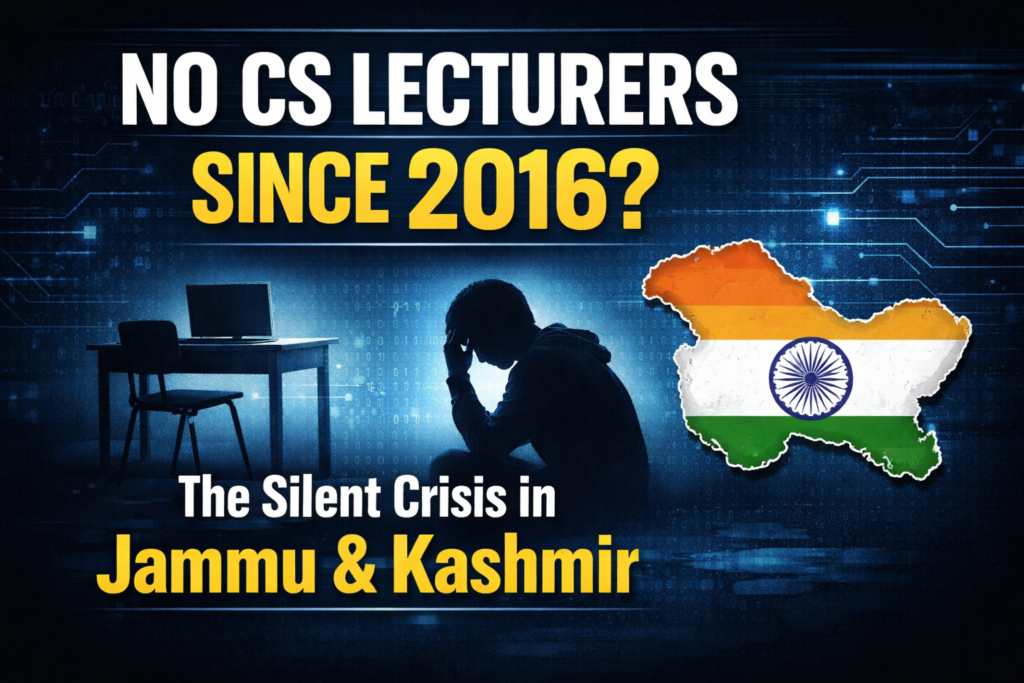
In fact, in several regions, there has been no regular recruitment of 10+2 Computer Science lecturers since 2016. This long gap is not merely an administrative delay-it reveals a deeper issue in the education system.
At a time when digital knowledge has become essential, the absence of qualified Computer Science educators in government schools is creating a silent crisis—one that threatens educational equality, student preparedness, and the future digital workforce.
Computer Science Is No Longer Optional
A decade ago, Computer Science was often treated as an additional or optional subject. Today, that is no longer the case.
Technology now shapes almost every field:
- Education
- Healthcare
- Banking
- Communication
- Governance
- Industry
Students are encouraged to build skills in coding, programming, data handling, and digital systems from an early stage because these skills form the basis of modern careers.
Whether a student wants to become:
- an engineer
- a data analyst
- a software developer
- a cybersecurity specialist
- a digital entrepreneur
they need foundational computer education during school years.
That is why the lack of Computer Science lecturers is alarming.
A subject that defines the future cannot be treated as an optional part of the present.
The Recruitment Gap Nobody Talks About
One of the most serious yet under-discussed issues in public education is the prolonged gap in Computer Science lecturer recruitment.
Traditional subjects often receive regular attention in staffing and recruitment. Vacancies are identified, recruitment notices are issued, and schools continue to fill positions.
But Computer Science frequently remains overlooked.
The result is:
- Vacant teaching posts
- Delayed appointments
- Temporary staffing arrangements
- Schools operating without subject specialists
This means that while the world is demanding greater digital readiness, the public education system is failing to build that readiness where it matters most—inside the classroom.
This contradiction should concern every student, parent, and policymaker.
How Students Are Being Affected
The absence of qualified Computer Science lecturers directly affects students in government schools.
Without proper teachers:
- Students miss structured programming education
- Practical computer knowledge remains weak
- confidence in technical subjects declines
- Higher education becomes more difficult
When these students reach college, they are suddenly expected to understand:
- programming languages
- database systems
- computer networks
- software fundamentals
But many begin these courses without adequate background knowledge.
Meanwhile, students from private schools often receive better infrastructure, better teaching support, and earlier exposure to these concepts.
This creates an unfair gap.
Students in government schools are expected to compete in the same digital world, but without the same digital preparation.
This inequality grows wider over time.
The Digital Divide Is Becoming an Education Divide
The term “digital divide” once referred mainly to unequal internet access.
Today, the digital divide has evolved.
Now it also includes:
- unequal access to computer education
- unequal access to qualified teachers
- unequal access to practical digital skills
This means that even if two students have access to the internet, their opportunities remain unequal if one has trained teachers and the other does not.
The lack of Computer Science lecturers turns digital inequality into educational inequality.
Students from under-resourced government schools face disadvantages that extend beyond academics—they affect career options, confidence, and future earning potential.
This is why the issue deserves urgent attention.
Temporary Solutions Are Not Real Solutions
To manage the shortage, many institutions depend on temporary arrangements:
- guest faculty
- contractual teachers
- staff from unrelated disciplines
These arrangements may help schools function temporarily, but they do not provide lasting quality education.
Temporary staffing often leads to:
- inconsistent teaching
- lack of accountability
- reduced specialization
- interruption in student learning
Computer Science is a technical subject that requires trained educators with up-to-date knowledge.
A long-term subject cannot depend on short-term solutions.
Temporary teachers may fill classrooms, but they cannot fill the long-term gap in digital education policy.
Why This Recruitment Gap Is Dangerous
At first glance, a delay in lecturer recruitment may seem like an administrative issue.
But the consequences are much larger.
Without strong Computer Science education at school level:
- Fewer students pursue technical careers confidently
- Universities receive underprepared learners
- The workforce lacks foundational digital competence
- Innovation capacity weakens
Every missing Computer Science lecturer today can mean hundreds of students without essential digital skills tomorrow.
That impacts not only individuals but the larger economy.
A country that aims to lead in innovation cannot afford to neglect the subject that drives innovation.
The Contradiction in Digital Policy
Governments promote:
- Digital India
- AI integration
- coding education
- innovation ecosystems
These are positive and necessary goals.
But these goals depend on students learning the basics of computing during school.
Without teachers, those policies remain incomplete.
This is the contradiction:
National digital ambitions are expanding, but school-level digital education infrastructure is not expanding at the same pace.
When that happens, policy remains stronger on paper than in practice.
And students pay the price.
Why Computer Science Must Be Treated as a Core Subject
For years, Computer Science has often been treated as secondary.
This approach is outdated.
Computer Science should be seen as a core academic subject because it supports:
- logical thinking
- analytical reasoning
- digital literacy
- future employability
In the same way that mathematics supports quantitative skills, Computer Science supports technological skills.
Without it, students are less prepared for the realities of the modern economy.
The future workforce requires digital competence.
That competence begins in school.
What Needs to Change
To close this gap, education systems need structural reform.
1. Regular Recruitment
Computer Science lecturer posts must be filled through regular recruitment cycles.
2. Dedicated Staffing
Every higher secondary school should have sanctioned Computer Science posts.
3. Better Infrastructure
Recruitment should be supported with functioning labs and an updated curriculum.
4. Policy Prioritization
Computer Science should receive the same importance as other mainstream subjects.
These are not optional reforms.
They are essential steps toward educational modernization.
The Bigger Question
The real issue is not whether Computer Science matters.
That question has already been answered by the demands of the modern world.
The real issue is this:
If Computer Science is essential for the future, why are students still waiting for qualified teachers in the present?
Until education systems answer this question through action, the gap between policy and reality will continue.
Conclusion
The absence of regular Computer Science lecturer recruitment is not just a staffing issue.
It is a sign that public education systems have not fully aligned with the realities of the digital era.
While the world moves toward AI, automation, and advanced technology, many students are still being denied access to the basic teaching needed to participate in that future.
This silence around Computer Science staffing is creating a silent education crisis.
A digital future cannot be built in classrooms where digital education is missing.
If governments truly want to prepare students for the future, then the first step is simple:
Recognize Computer Science as essential.
Recruit the teachers.
Build the foundation.
Because without that foundation, every promise of digital progress remains incomplete.