
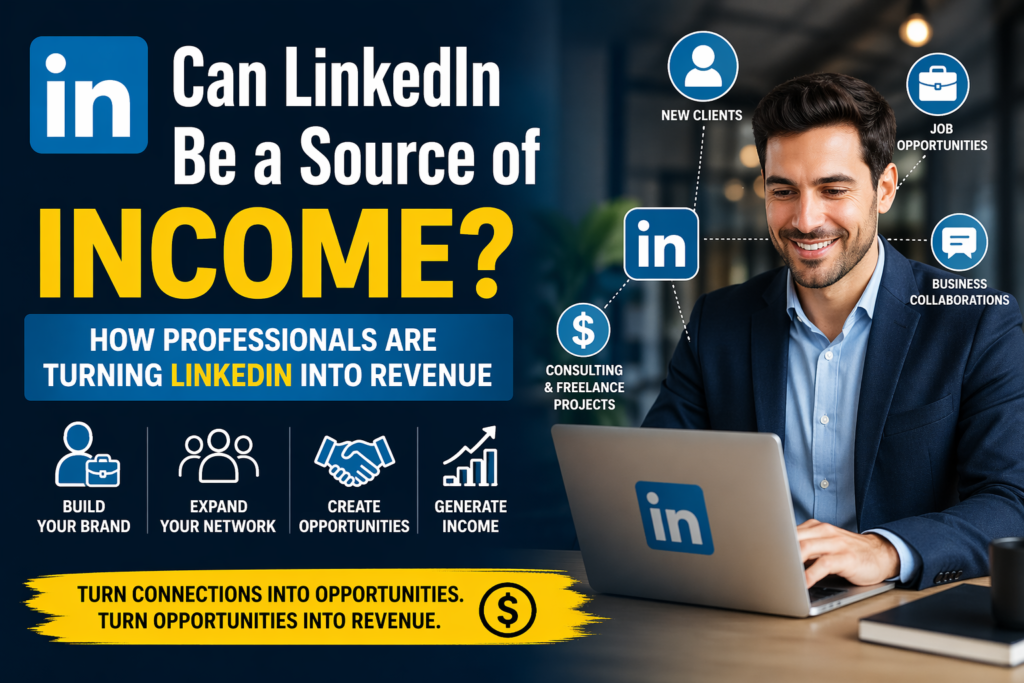
Many professionals still see LinkedIn as a place to upload resumes, connect with recruiters, and search for jobs.
But the reality is changing.
Can LinkedIn be a source of income?
Yes absolutely.
While LinkedIn does not directly pay users for posting content, it has become one of the most effective platforms for generating income through professional credibility, strategic networking, and business opportunities.
Today, freelancers, consultants, job seekers, coaches, and professionals across industries are using LinkedIn to attract clients, consulting projects, collaborations, speaking invitations, and even high-paying job offers.
The platform may not pay for content views like YouTube or TikTok, but it can create something even more valuable:
Professional trust that leads to income.
And in the digital economy, trust is one of the most profitable assets a professional can build.
How Can LinkedIn Be a Source of Income for Professionals?
The answer lies in understanding how income is created on LinkedIn.
Unlike social media platforms that reward creators through ad revenue or creator funds, LinkedIn rewards professionals by increasing their visibility among decision-makers.
That visibility can lead to:
- freelance clients
- consulting contracts
- paid partnerships
- job offers
- speaking opportunities
- collaboration requests
This means that the real income from LinkedIn comes from the opportunities your content creates.
Every valuable post you share becomes a public demonstration of your expertise.
And when people trust your expertise, they are more likely to:
- hire you,
- Recommend you,
- collaborate with you,
- pay for your services.
That is how LinkedIn becomes a source of income.
Why Trust Is the Real Currency on LinkedIn
Most people chase likes, followers, and impressions.
But those metrics alone do not create income.
On LinkedIn, trust is the real currency.
When professionals consistently share useful content, solve problems publicly, and demonstrate expertise, they build authority.
That authority creates trust.
And trust creates opportunities.
For example, imagine a freelance writer shares a post about:
“3 website copy mistakes that reduce sales.”
To some people, it may look like a simple educational post.
But to a business owner struggling with low website conversion rates, that post conveys expertise.
That expertise builds trust.
That trust may lead to:
- a client inquiry,
- a consultation request,
- a paid project.
This is why one thoughtful post on LinkedIn can be worth far more than thousands of casual social media views.
Can LinkedIn Make Money Without Paying Creators Directly?
This is one of the most common questions professionals ask:
Can LinkedIn make money for users if it does not directly pay creators?
The answer is yes.
The platform itself may not pay creators based on views or likes, but it helps users earn money by connecting them with opportunities.
For example, professionals use LinkedIn to:
1. Find Freelance Clients
Freelancers use content to showcase expertise and attract inbound leads.
A consultant who regularly posts useful insights about marketing, HR, finance, or technology can attract clients without cold outreach.
2. Generate Consulting Opportunities
Consultants often use LinkedIn to build authority in their niche.
When companies see consistent expertise, they may reach out for paid advisory work.
3. Attract Better Job Offers
Recruiters actively search for experts who demonstrate skills publicly.
This means a professional who shares industry insights can attract higher-paying opportunities.
4. Secure Speaking Engagements
Visible professionals are often invited to:
- webinars,
- conferences,
- podcasts,
- workshops.
Many of these opportunities are paid.
5. Build Business Partnerships
Founders and professionals use LinkedIn to form collaborations that generate revenue.
This is how LinkedIn income opportunities grow over time.
Why LinkedIn Traffic Is More Valuable Than Viral Traffic
Many creators focus on going viral.
They chase:
- more followers,
- more likes,
- more views.
But viral traffic does not always generate revenue.
The quality of attention matters more than the quantity.
On entertainment platforms, users scroll for fun.
On LinkedIn, users scroll for:
- solutions,
- expertise,
- talent,
- services.
That means one business owner seeing your content may be worth more than ten thousand random viewers elsewhere.
One recruiter can offer a job.
One founder can become a client.
One company can create a partnership.
This is why many professionals discover that LinkedIn can generate income more effectively than platforms with higher views but lower intent.
How to Earn from LinkedIn Strategically
Professionals who successfully earn from LinkedIn usually focus on three things:
1. Share Valuable Expertise
Instead of posting generic motivational content, share useful knowledge that solves real problems.
For example:
- tips,
- frameworks,
- case studies,
- lessons learned.
This builds authority.
2. Stay Consistently Visible
Trust grows through repetition.
When people regularly see valuable content from you, they begin to remember your expertise.
Visibility creates familiarity.
Familiarity creates trust.
3. Build Professional Credibility
Your content should demonstrate:
- what you know,
- What problems do you solve?
- Why your expertise matters.
That credibility turns into opportunities.
This is the real answer to how to earn from LinkedIn.
The Formula Behind LinkedIn Income Opportunities
The professionals generating revenue on LinkedIn understand one simple formula:
Visibility → Credibility → Trust → Income
First, your content makes you visible.
Then visibility builds credibility.
Credibility creates trust.
And trust creates opportunities.
Those opportunities lead to income.
This is the hidden monetization system behind LinkedIn.
Not:
- chasing trends,
- chasing likes,
- chasing virality.
But:
- building authority,
- sharing expertise,
- staying visible.
Final Thoughts: Can LinkedIn Be a Source of Income?
So, can LinkedIn be a source of income?
Yes, without question.
LinkedIn may not pay professionals directly for content, but it creates the visibility, trust, and credibility that generate revenue.
That revenue can come from:
- freelance work,
- consulting,
- partnerships,
- speaking engagements,
- better job opportunities.
This is why more professionals are beginning to see LinkedIn not just as a networking platform, but as an income-generating professional asset.
Because in the end:
Your expertise builds trust.
Trust creates opportunity.
Opportunity creates income.
And that is exactly how LinkedIn becomes a source of income.