The higher education system in India is undergoing a major transformation in 2026, driven by new regulations introduced by the University Grants Commission. These rules are aimed at improving transparency, quality, and accountability across universities. However, they have also created confusion and concern among students regarding degree validity, course selection, and future career opportunities.
If you are planning to take admission this year, understanding these changes is essential.
What Are the New UGC Rules 2026?
The UGC has introduced a set of updated regulations affecting all universities and higher education institutions in India. These include:
- Stricter norms for course approval and delivery mode
- Mandatory compliance with quality and accreditation standards
- New guidelines on distance and online education
- Implementation of equity and anti-discrimination policies
These reforms apply to central, state, private, and deemed universities, making them a nationwide policy shift.
Degree Validity: The Biggest Concern
One of the most critical aspects of the new rules is degree validity.
Under recent regulatory frameworks, certain programs—especially those in healthcare and allied fields—must be completed through regular (offline) mode. Courses offered in distance or online mode without proper approval may be considered invalid.
This directly affects:
- Eligibility for government jobs
- Admission to PhD programs
- Qualification for exams like NET/JRF
Students enrolling in unapproved programs risk wasting both time and money.
Risks for Students
The new regulations highlight several risks that students must be aware of:
1. Invalid Degrees
Degrees obtained from unapproved courses or institutions may not be recognized for employment or higher education.
2. Fake Universities
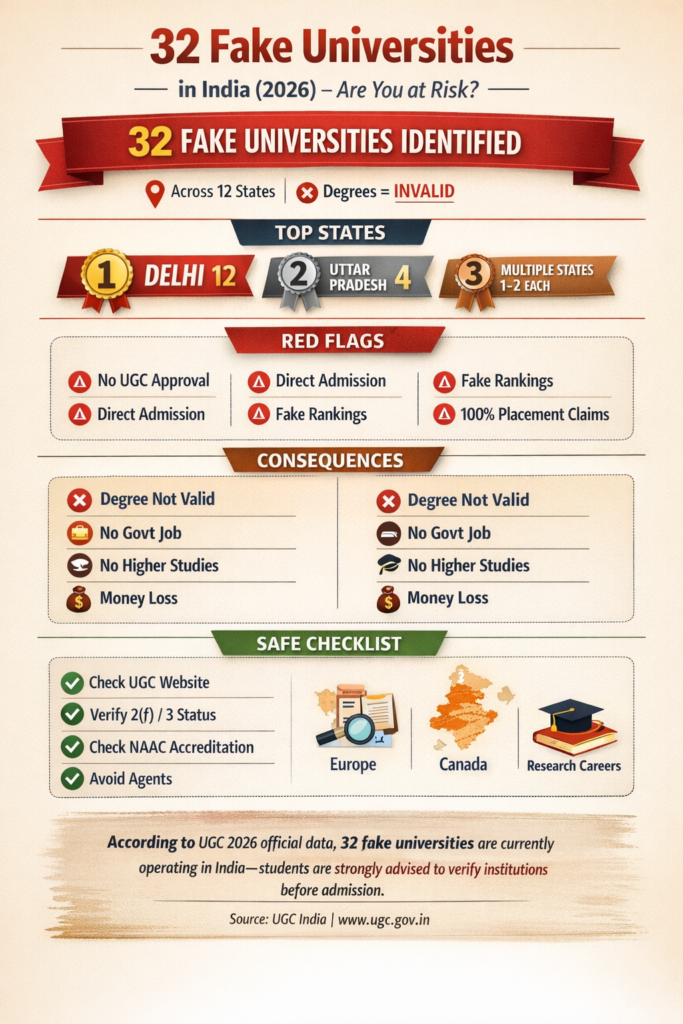
The UGC has repeatedly warned about fake institutions operating across India. Degrees from such institutions have no legal value.
3. Distance Learning Limitations
Many technical and healthcare-related courses are now restricted in online or distance mode due to lack of practical training.
4. Limited Career Opportunities
Students may become ineligible for:
- Research programs (PhD)
- Competitive exams (NET/JRF)
- Professional licensing
Impact on Universities
Universities are also facing significant changes:
- Reduced autonomy in launching new courses
- Increased regulatory scrutiny
- Mandatory approval processes
- Pressure to maintain academic standards
While these steps aim to improve quality, they have also slowed down admissions and created administrative challenges.
What Should Students Do Before Taking Admission?
To avoid future problems, students must take the following precautions:
Verify University Recognition
Always check if the institution is approved by UGC or the relevant authorities.
Check Course Validity
Ensure the program is allowed in the chosen mode (regular/online/distance).
Understand Career Goals
Choose courses aligned with your plans (jobs, research, professional practice).
Avoid Assumptions
Do not rely only on advertisements or university claims—verify from official sources.
Expert Insight
The 2026 UGC reforms reflect a strong attempt to standardize higher education in India. However, the transition phase has created confusion among students and institutions.
Experts believe that while these rules will improve long-term quality, lack of awareness remains the biggest challenge.
Conclusion
The new UGC rules in 2026 are a turning point for Indian higher education. While they aim to enhance quality and transparency, they also introduce new risks for uninformed students.
Before taking admission, it is crucial to:
- Verify all details
- Understand regulations
- Make informed decisions
Your academic future depends on the choices you make today.