The internet is flooded with opinions about artificial intelligence.
Every day, someone claims AI will “change everything.”
But recently, one message stood out from the noise.
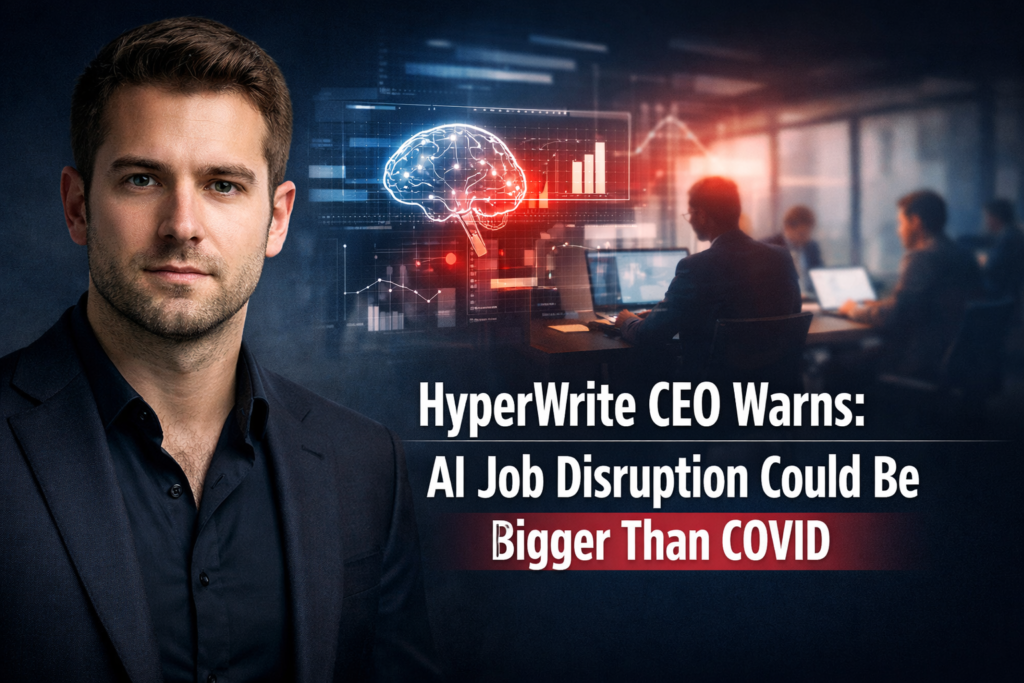
It came from Matt Shumer, the CEO of HyperWrite, and it wasn’t just another optimistic tech prediction.
It was a warning.
In a viral essay titled “Something Big Is Happening,” Shumer warned that the impact of AI on jobs, especially white-collar jobs, could be “much bigger than COVID.”
That statement spread rapidly across social media, tech communities, and news outlets.
Why?
Because it touched a fear millions of professionals are already starting to feel:
What if AI changes the workforce faster than we are prepared for?
And when that warning comes from someone actively building AI tools, people pay attention.
Why This Warning Hit So Hard
There is no shortage of AI headlines.
Some say AI will create opportunities.
Others say AI will eliminate jobs.
But Shumer’s message felt different because it was direct, personal, and urgent.
He compared today’s AI moment to the early days of the pandemic—a period when life seemed normal, while major disruption was already approaching.
That comparison resonated deeply.
Because many people remember how quickly the world changed.
Shumer’s point was simple:
Many people still think AI disruption is years away, but according to those building it, the change has already started.
That is exactly what made the article go viral.
It didn’t feel like speculation.
It felt like an insider warning.
“If Your Job Happens on a Screen, AI Is Coming for It”
Among the most talked-about lines from the essay was this:
“If your job happens on a screen, AI is coming for it.”
That one sentence sparked debate across industries.
For decades, white-collar jobs were considered secure.
Jobs in writing, administration, software, consulting, customer support, and research were seen as “safe” from automation.
But AI is changing that reality.
Today, AI can already assist with:
- writing reports
- drafting emails
- analyzing data
- generating code
- customer service
- summarizing documents
- creating marketing content
These were once tasks requiring skilled professionals.
Now they can be completed in seconds.
That doesn’t necessarily mean AI will replace all workers.
But it does mean the nature of work is changing—fast.
And that is the heart of Shumer’s warning.
Why Professionals Are Taking This Seriously
The reason this went viral is that it reflects what many professionals already sense:
AI is no longer a future concept; it is already affecting real jobs.
Across industries, companies are experimenting with AI to improve productivity, reduce costs, and automate repetitive work.
That means employees everywhere are beginning to ask difficult questions:
- Will my role change?
- Which skills will matter next?
- How do I stay relevant?
These are not theoretical concerns anymore.
They are practical career concerns.
That is why Shumer’s article connected with so many people.
Because it gave words to an uncertainty already growing in the workforce.
The Real Message Behind the Fear
Although the essay sounded alarming, the deeper message was not panic.
It was preparation.
Shumer’s core idea is that people need to adapt early instead of reacting late.
In practical terms, that means:
- learning how AI tools work
- focusing on strategic thinking
- strengthening creativity
- improving problem-solving skills
- Building expertise, AI cannot easily replace
The professionals who adapt first may benefit the most.
Because the future may not belong to people who resist AI.
It may belong to those who learn how to use it effectively.
That is a much more constructive message than fear.
Why This Became More Than Just a Blog Post
Most AI articles disappear in a day.
This one didn’t.
Because it became part of a bigger conversation:
How fast is AI changing the world of work?
That question affects everyone:
- students choosing careers
- employees planning their future
- businesses redesigning teams
- Educators updating skills training
This is why the essay resonated far beyond the tech industry.
It was not only about software.
It was about economic change, career uncertainty, and the future of human work.
That makes it personal for almost everyone.
And personal stories spread.
That is why the article went viral.
The Bigger Reality We Can’t Ignore
Whether or not every prediction in the essay proves correct, one thing is undeniable:
Artificial intelligence is accelerating workplace transformation.
The companies that adapt will move faster.
The workers who learn new tools will stay competitive.
And the industries that ignore the shift may struggle.
This is not about fear.
It is about awareness.
Because understanding change early gives people time to prepare.
And in a fast-moving AI economy, preparation is power.
Final Thoughts
Matt Shumer’s viral warning struck a nerve because it revealed something many people are quietly realizing:
AI is no longer just changing technology — it is changing careers.
That truth is uncomfortable.
But it is important.
The future of work may look very different from the present.
And the biggest risk may not be AI itself.
The biggest risk may be ignoring how quickly it is advancing.
That is why “Something Big Is Happening” became more than a viral article.
It became a wake-up call.